

About Us
Home/about
Vision & Mission
Bharat possesses one of the world's oldest and most diverse knowledge traditions. Over millennia, generations of sages, acharyas, scholars, and practitioners developed sophisticated systems of knowledge covering philosophy, language, spirituality, astronomy, architecture, health, ethics, governance, arts, and human development.
A distinguishing feature of the Bharatiya knowledge tradition is its dynamic and evolving nature. Knowledge was never viewed as static or frozen in time. Each generation studied, interpreted, refined, and expanded upon earlier insights through experience, observation, contemplation, dialogue, and practice. This spirit of continuous learning and renewal remains one of the greatest strengths of Sanatana Dharma.
Over the centuries, many streams of traditional knowledge faced disruption, decline, or fragmentation due to a variety of historical, social, and political factors. Periods of foreign invasions, the destruction or neglect of centers of learning, and later colonial educational policies contributed to the weakening of several indigenous knowledge systems and institutions. As a result, many valuable traditions became less accessible to contemporary society, surviving only in scattered lineages, manuscripts, and oral traditions.
At the same time, rapid advances in modern science and technology have transformed human life, providing unprecedented levels of comfort, connectivity, and material progress.
Meet our Founder

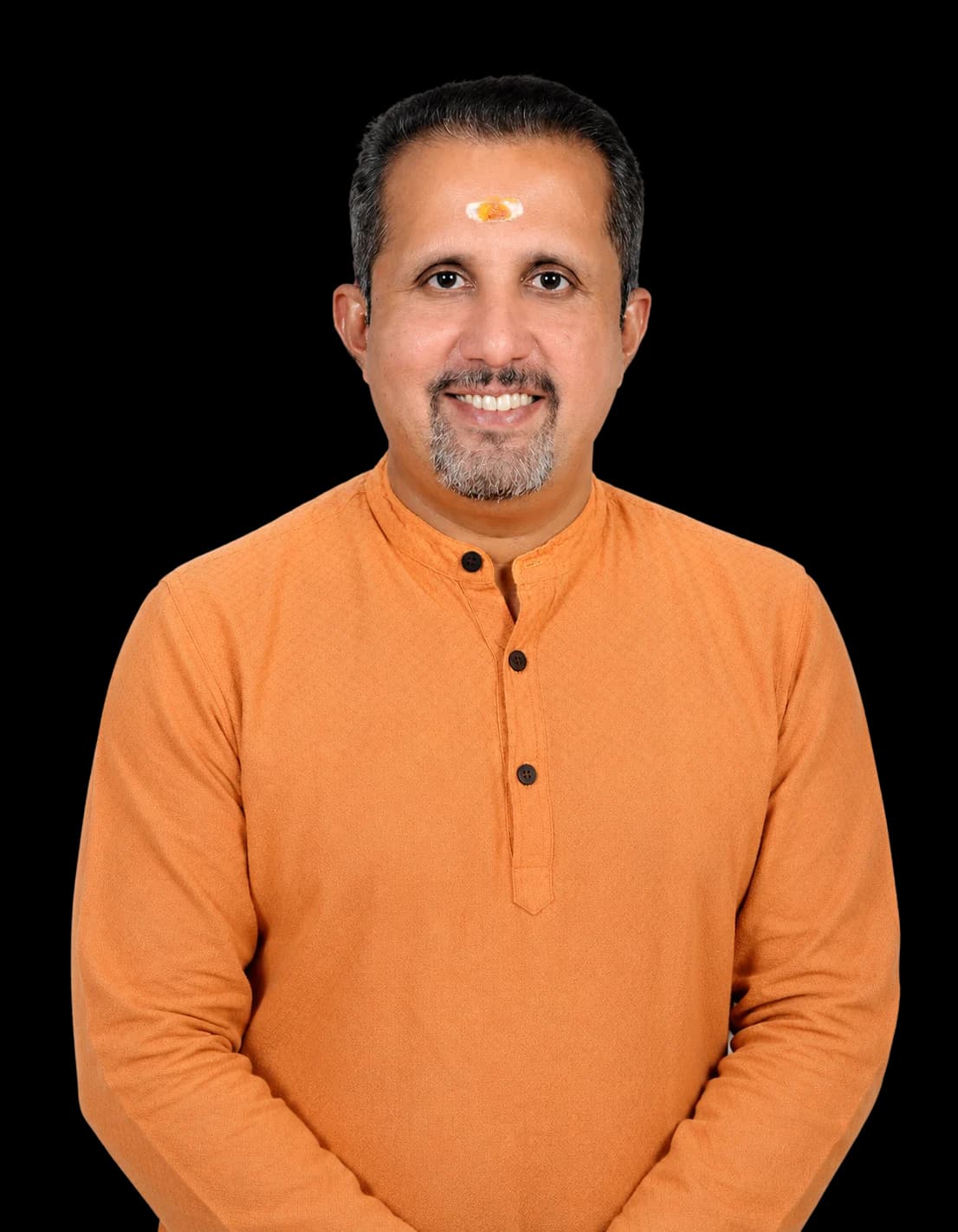
K. G. Sreejith Panicker
Founder of Srilalitavidyapitham
Srilalitavidyapitham was founded by K. G. Sreejith Panicker, whose professional and personal journey reflects a unique integration of technical education, corporate leadership, psychology, and Bharatiya knowledge traditions.
With a foundation in technical education and more than eighteen years of experience in leading Indian corporate organizations, including Eicher, Godrej, and Tata Group companies, he served in various managerial and leadership roles. During this period, his deep interest in human behaviour, leadership, and human potential led him to pursue formal studies in Psychology, completing advanced academic qualifications in the discipline.
Since 2015, he has been actively engaged in the fields of training, coaching, mentoring, and leadership development, working with professionals, entrepreneurs, educational institutions, and corporate organizations across India. His work has focused on helping individuals and organizations unlock their potential through a deeper understanding of human behaviour, performance, and personal growth.
Alongside his professional pursuits, Sri Sreejith's spiritual and intellectual quest led him to the systematic study of Indian Knowledge Systems. Inspired by the blessings of his Kula Devatas, guided by his parents, and nurtured through the grace and guidance of his gurus, he embarked on a journey through the traditional disciplines of Tantra, Jyotisha, Vastu Shastra, Sanskrit, and Vedanta. What began as individual streams of learning gradually revealed itself as an interconnected body of knowledge offering profound insights into human life, consciousness, and the cosmos.
His continued study, upasana, sadhana, and engagement with traditional practitioners enabled him to explore these disciplines with both reverence for tradition and an openness to contemporary inquiry. Drawing upon his background in technical education, psychology, coaching, and practical life experience, he developed a distinctive perspective on the relevance of traditional wisdom in addressing modern challenges.
These experiences inspired the establishment of Srilalitavidyapitham —a platform dedicated to the authentic study, practice, preservation, and contemporary application of Bharatiya Knowledge Traditions. Through this initiative, he seeks to make traditional wisdom accessible to sincere seekers, students, practitioners, and householders who wish to engage with these disciplines in a meaningful, responsible, and transformative manner.
His vision is to contribute to the revival of Indian Knowledge Systems by fostering a culture of learning, research, practice, and dialogue that remains rooted in tradition while being relevant to the needs of the present age.